Wild Surf, Cliffs and a Waterfall
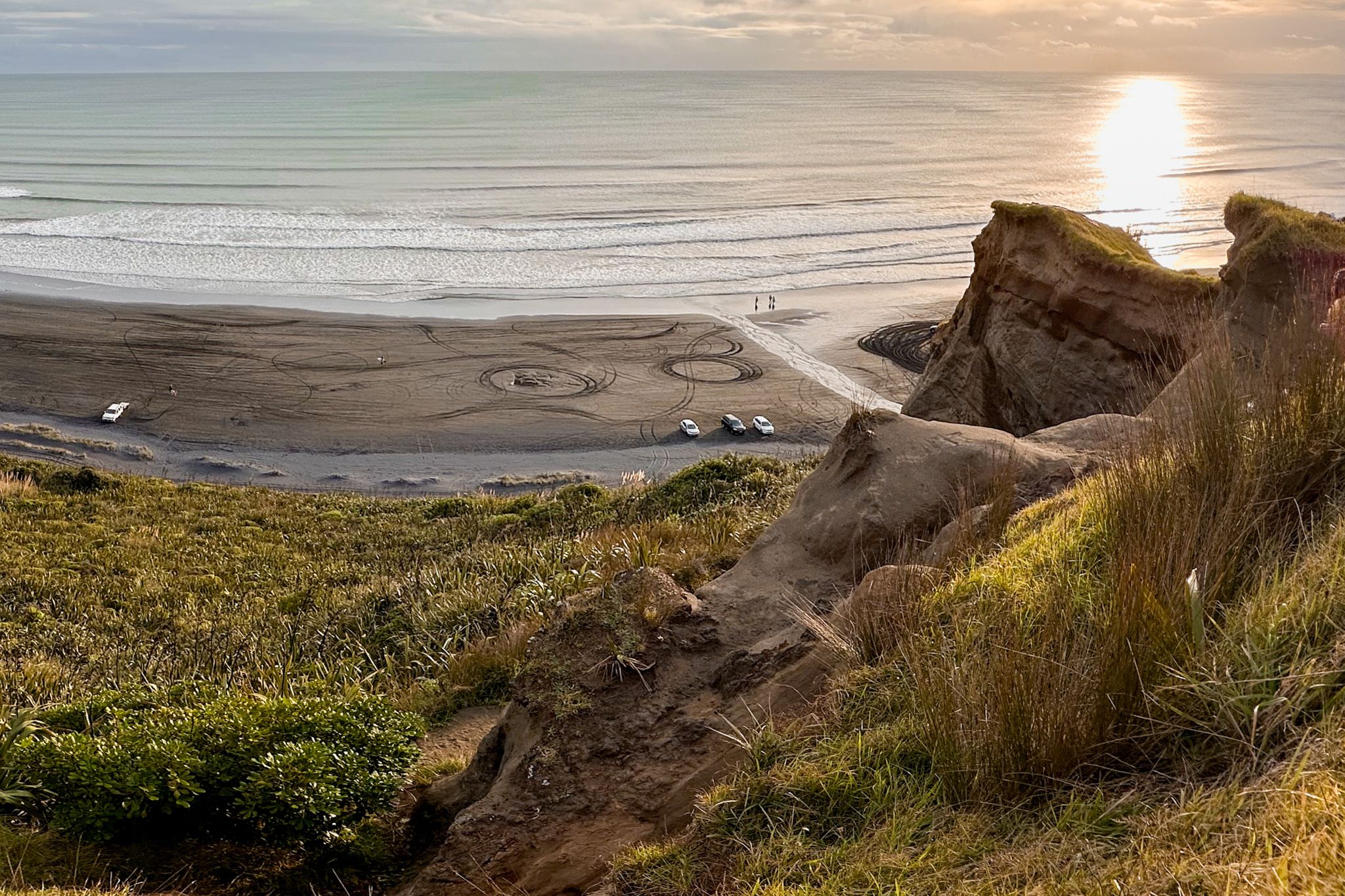
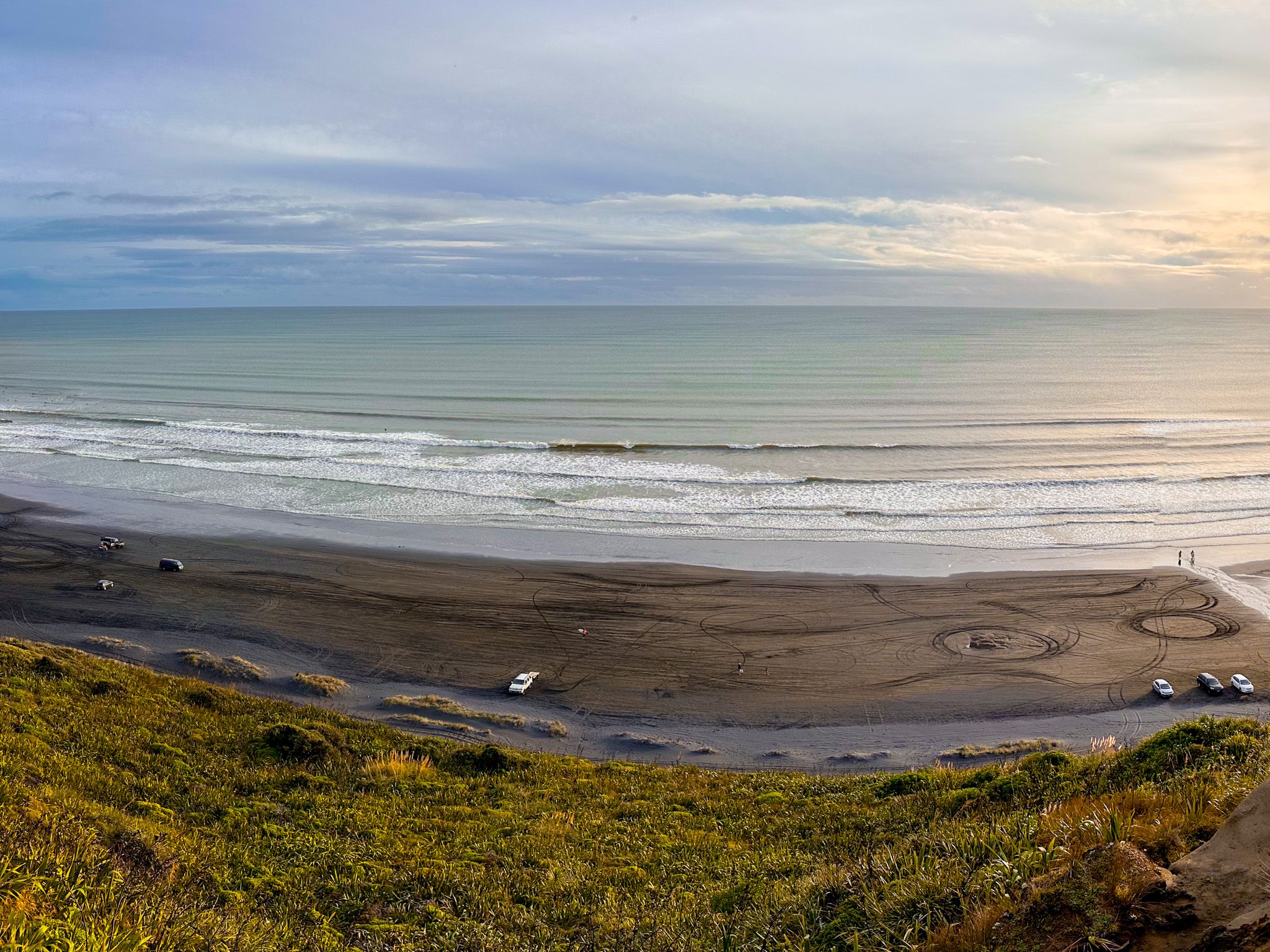
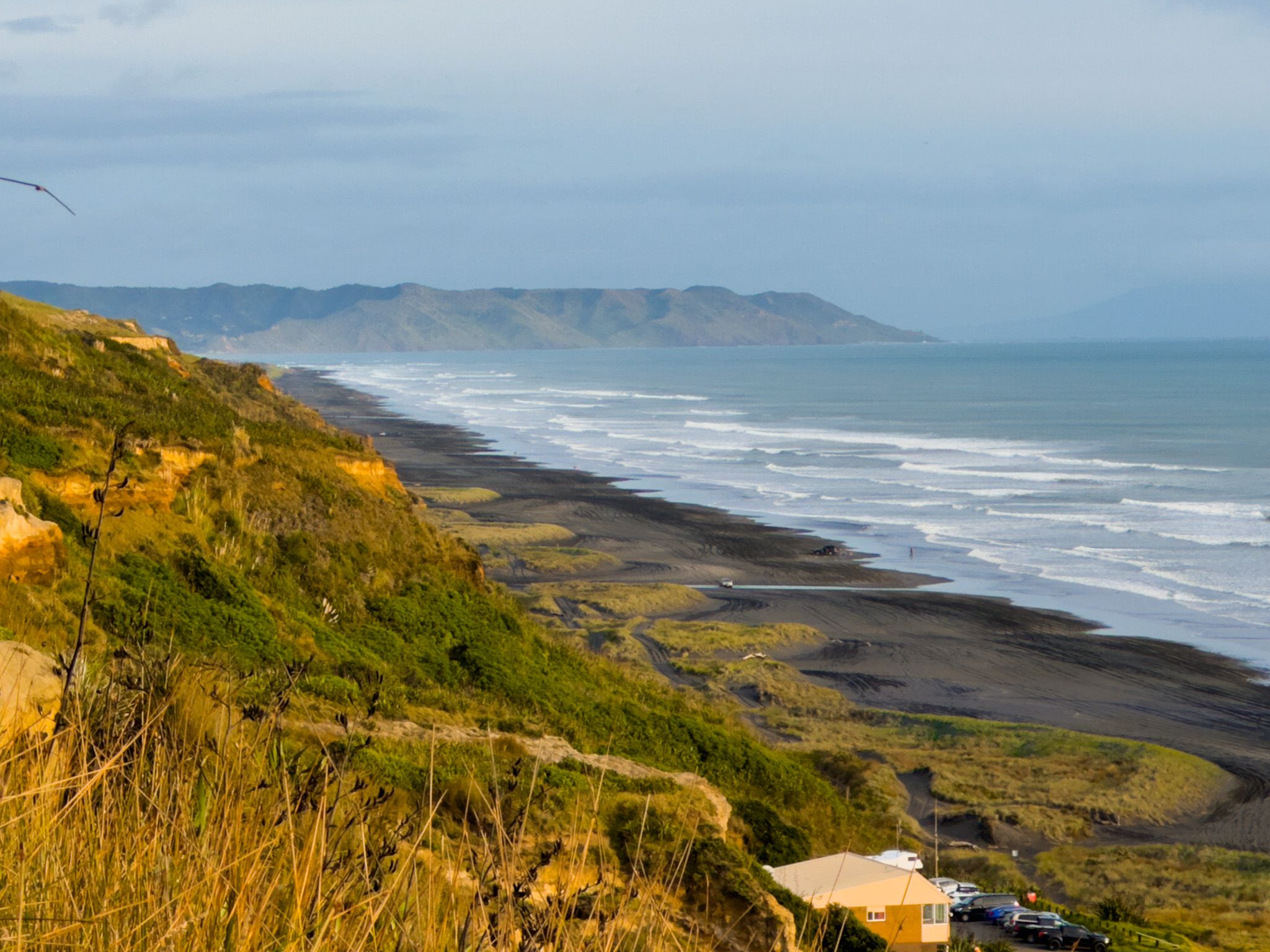
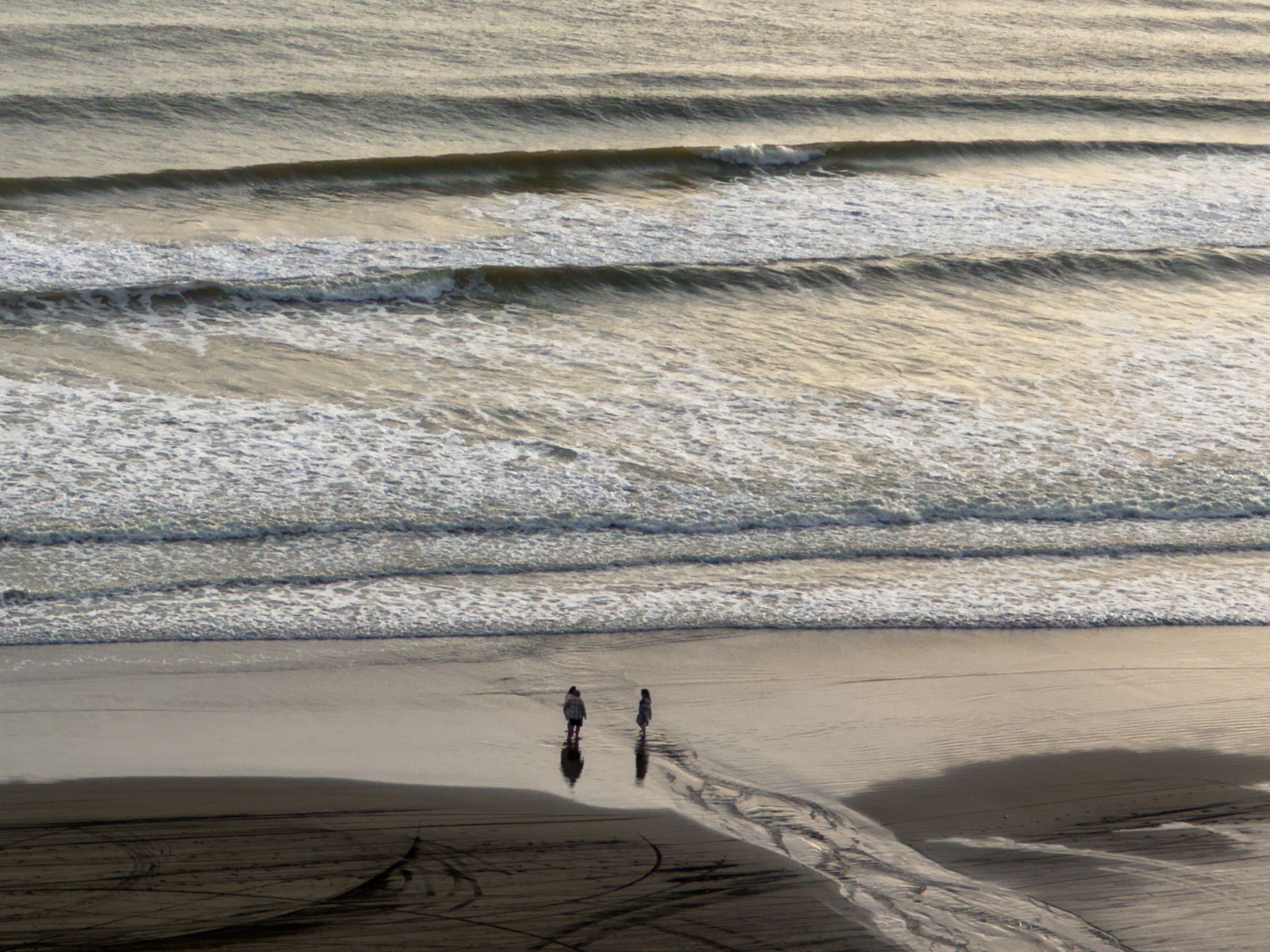
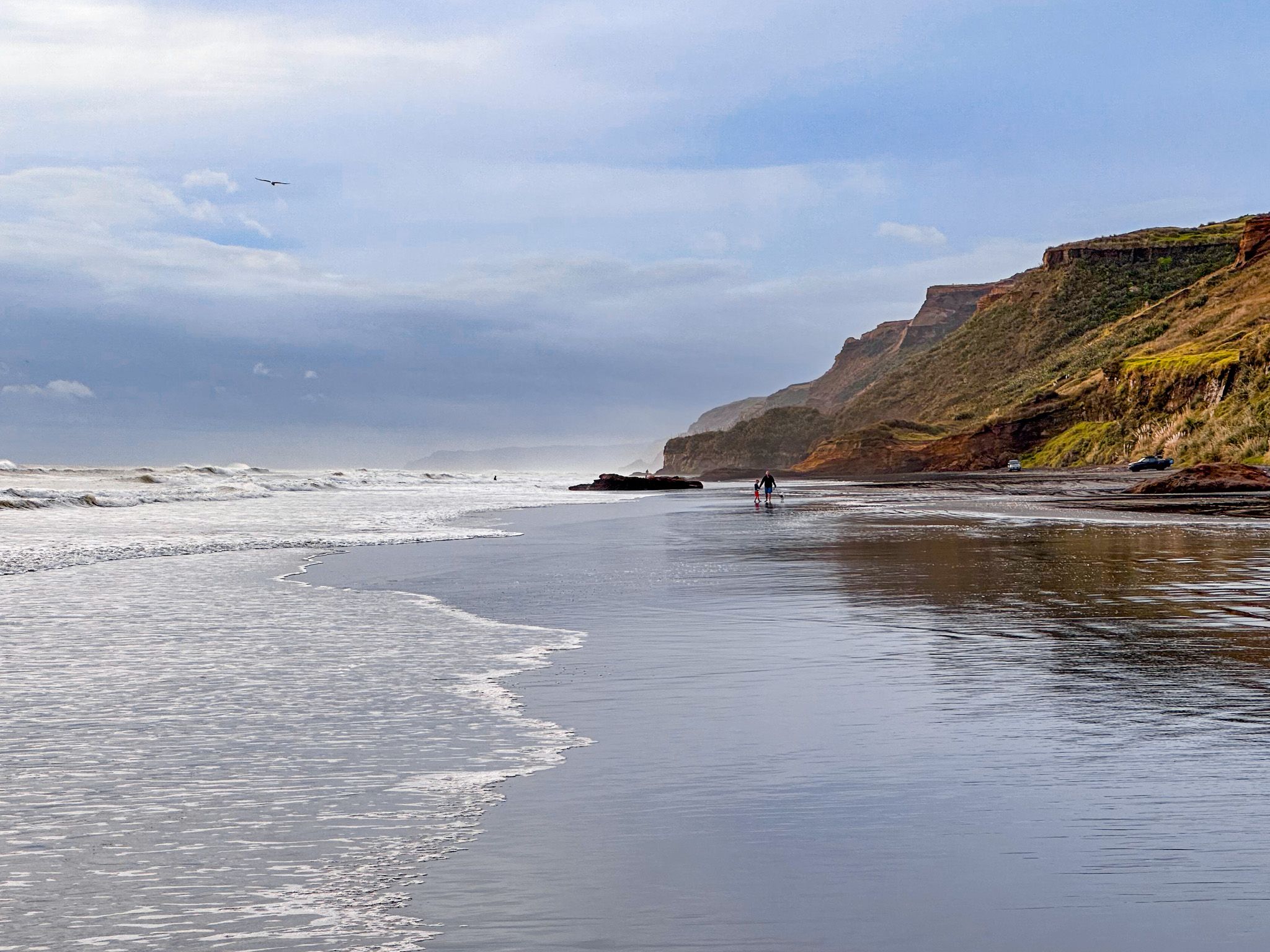
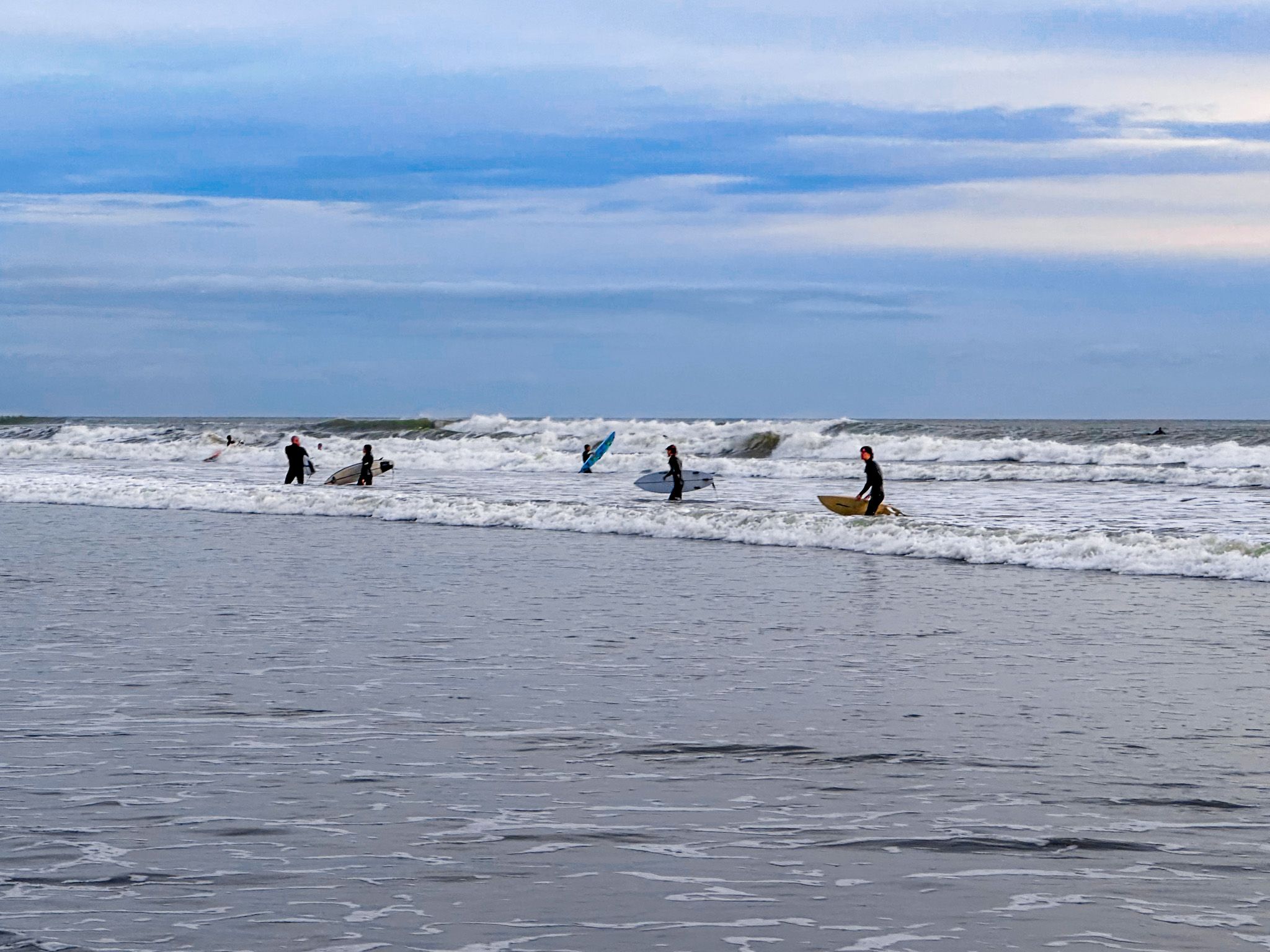
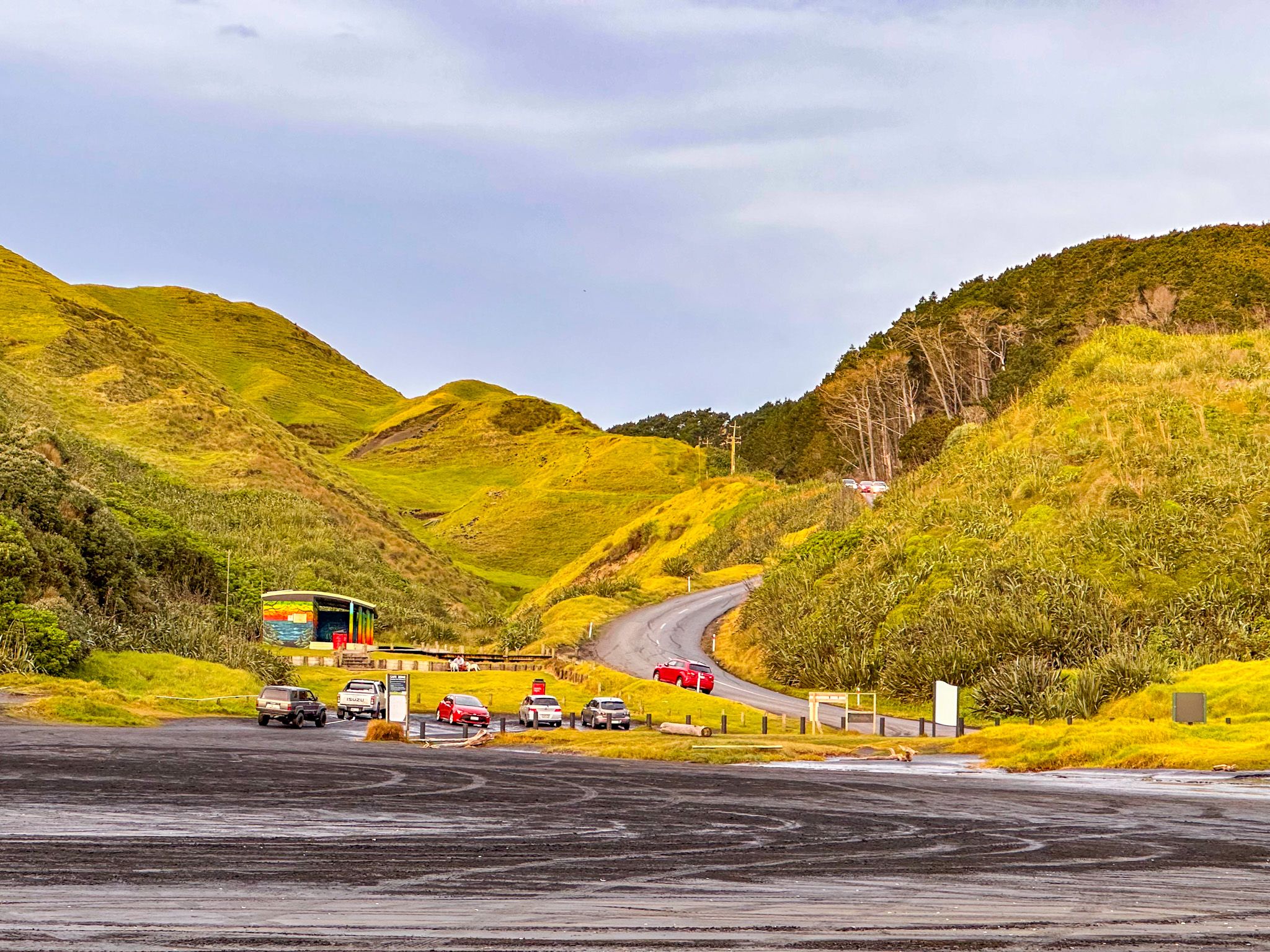
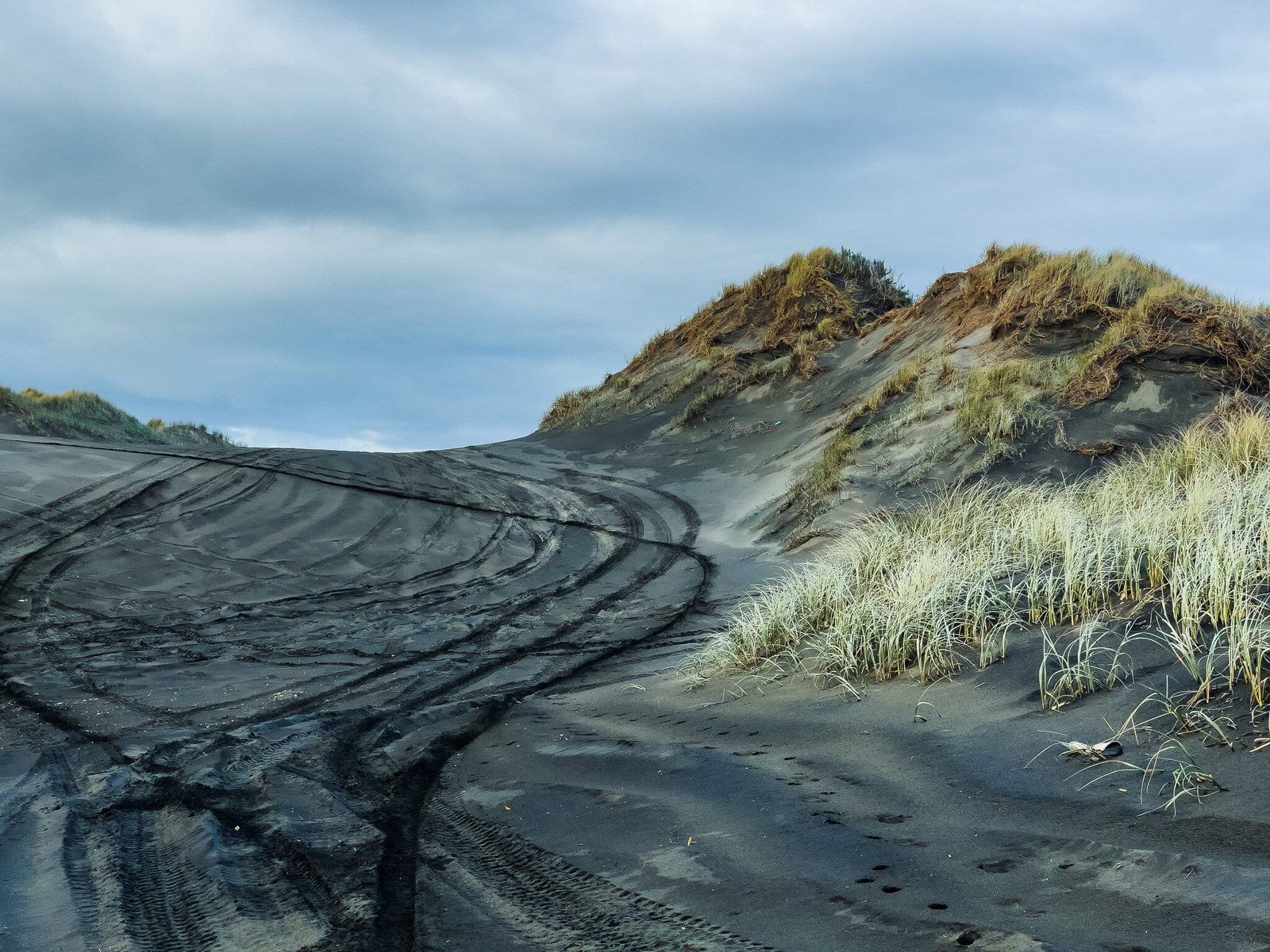
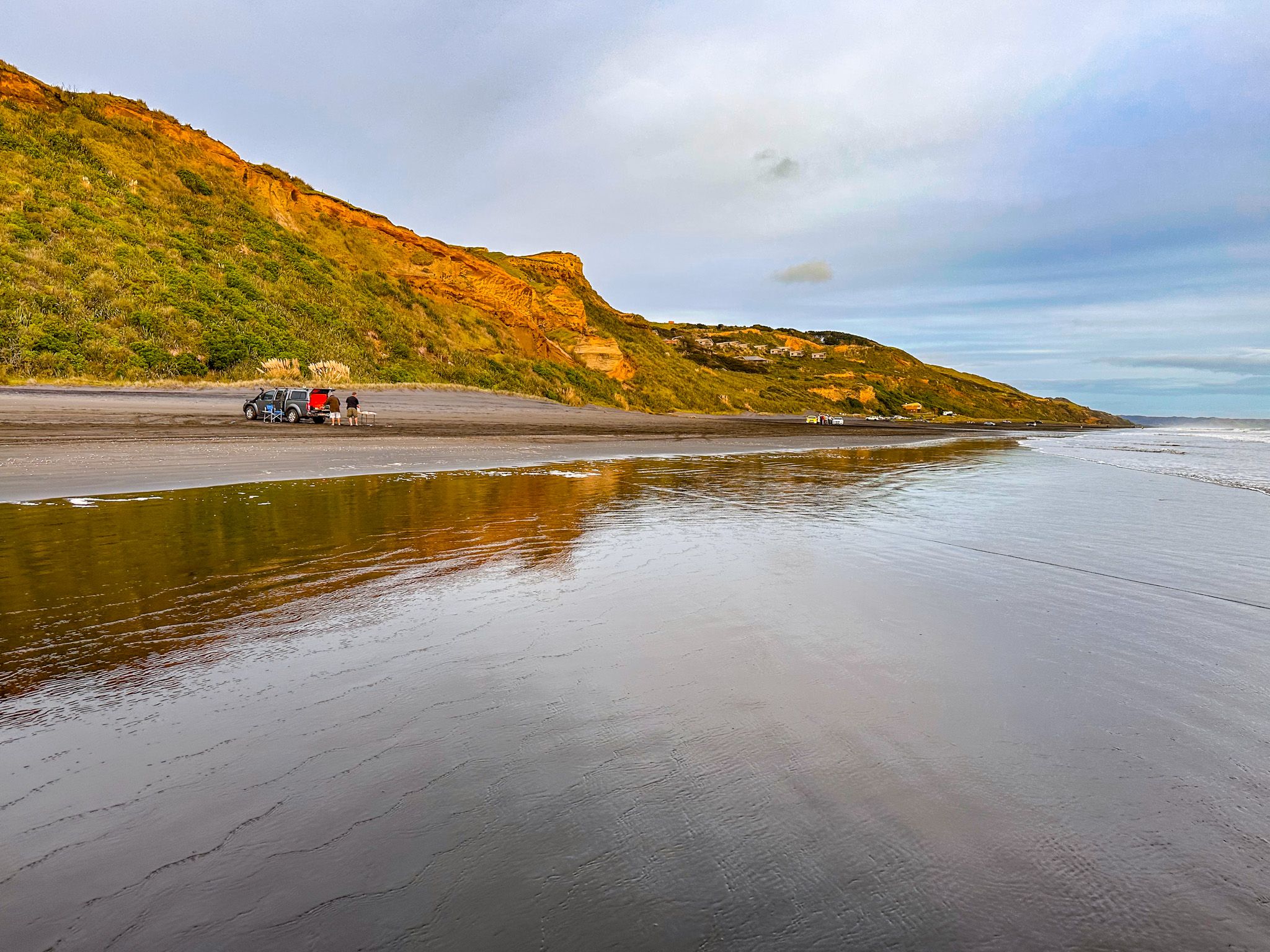
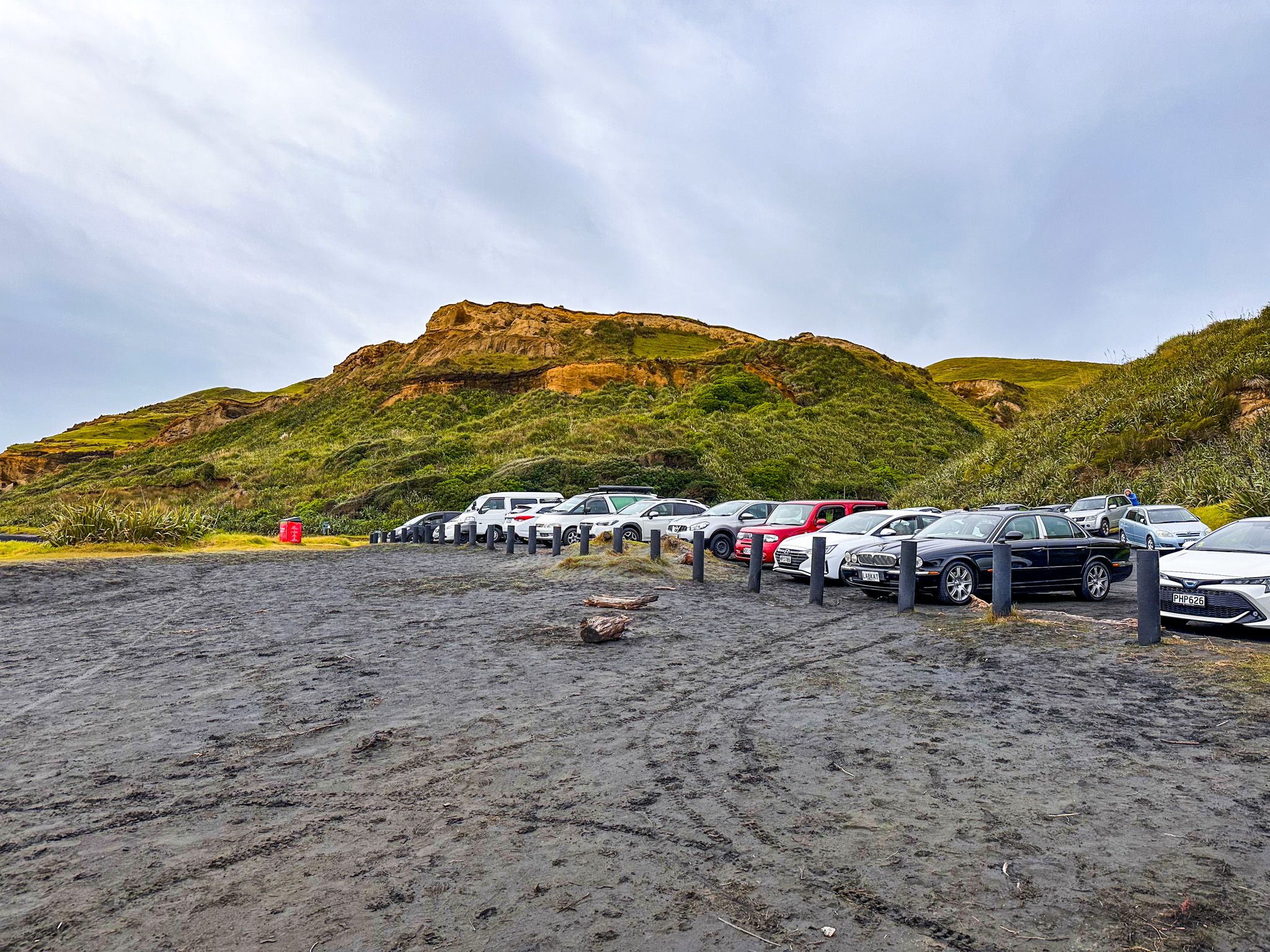
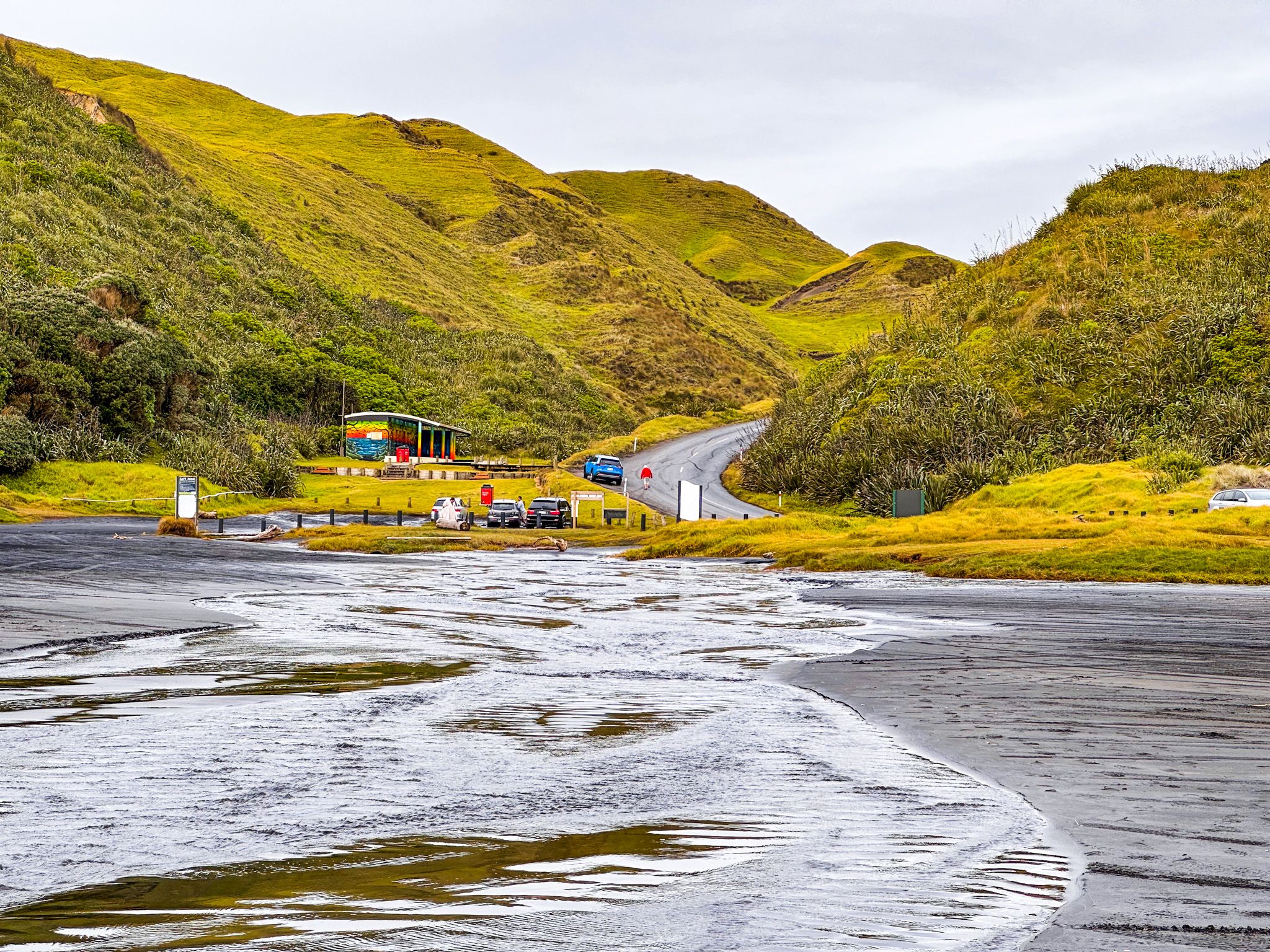
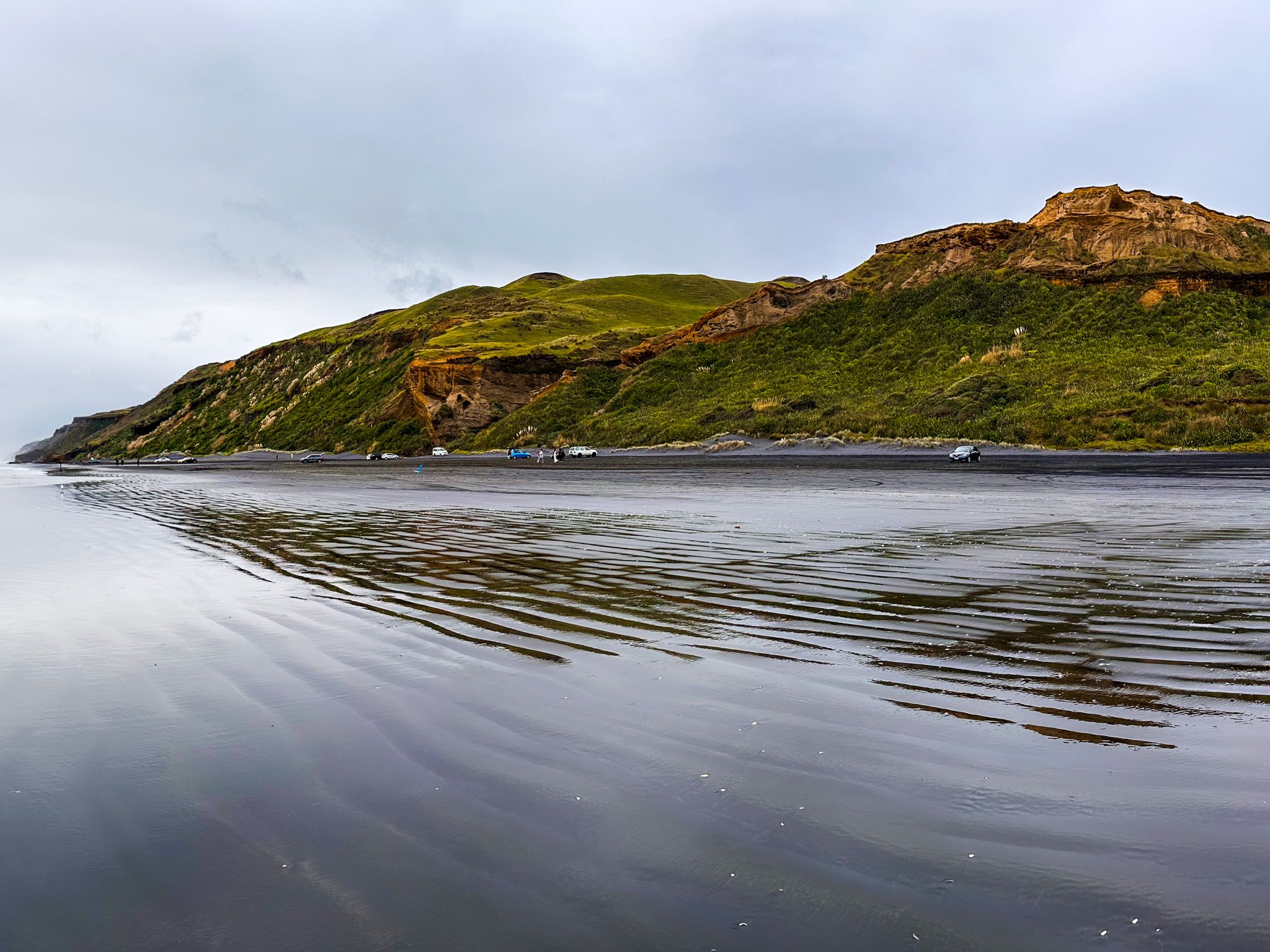
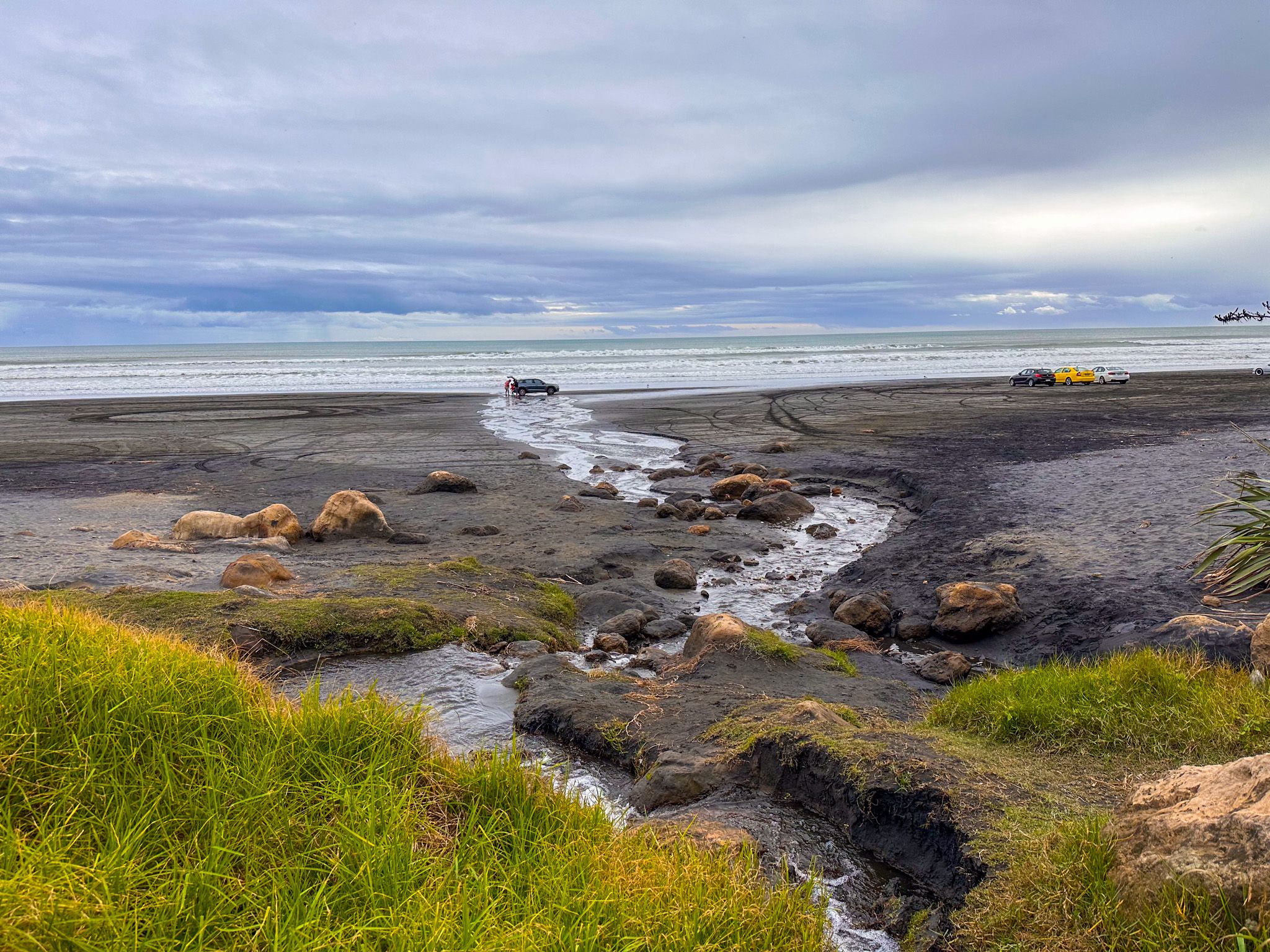
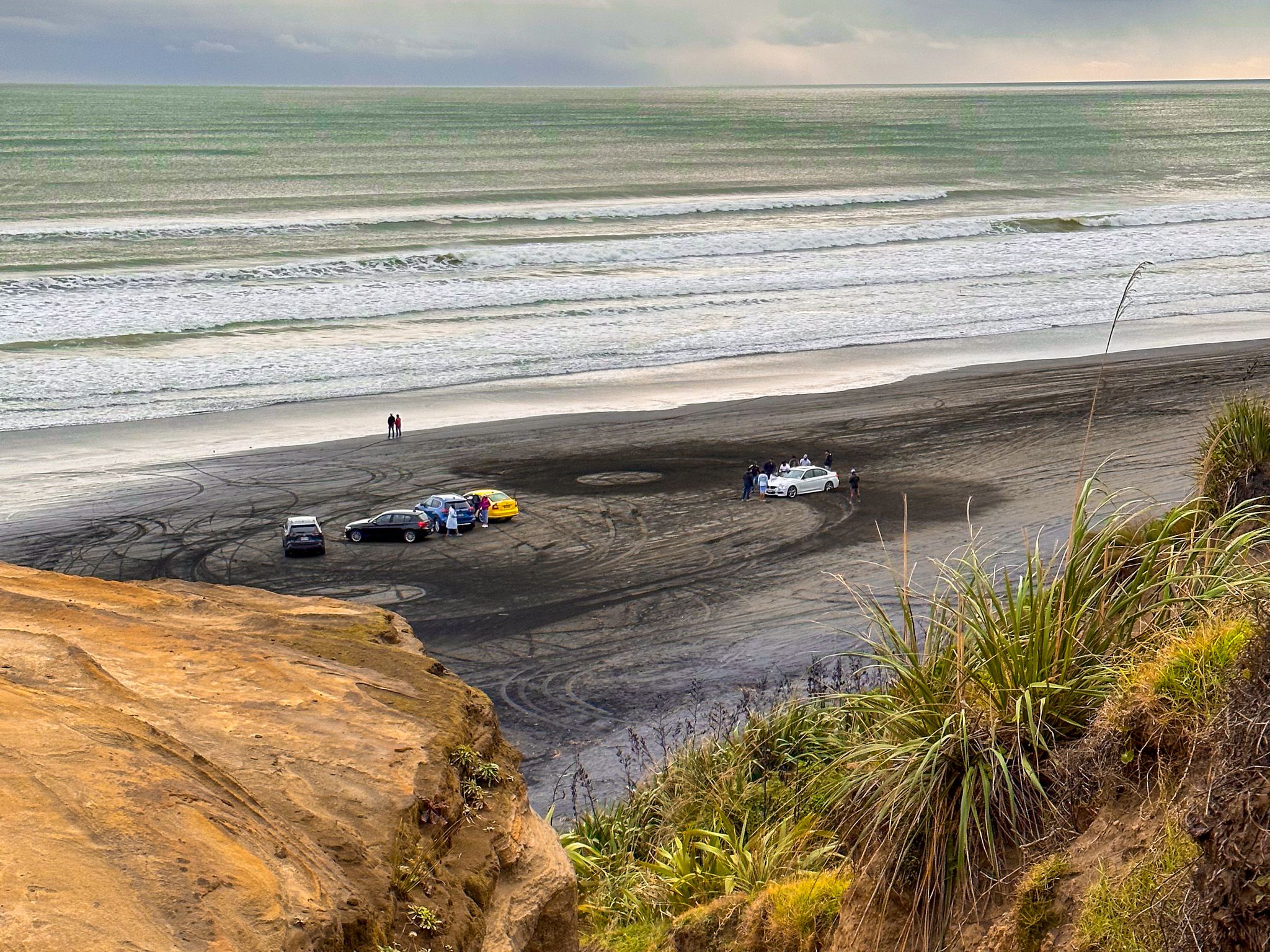
Karioitahi Beach is the most accessible of the west coast beaches on the Āwhitu Peninsula in southwest Auckland, reached by a sealed road from Waiuku about eight kilometres to the west. It is a long, straight stretch of black iron sand backed by high dunes and eroded cliff faces, facing directly onto the Tasman Sea. Wind and waves arrive with little obstruction from the west, making this a genuinely bracing environment on most days. The beach is popular for surfing, paragliding, horse riding, driving and fishing. A surf lifesaving club patrols during Summer weekends.
The Beach and its Character
The black sand at Karioitahi has the same geological origin as the rest of the peninsula's west coast, iron oxide particles eroded from Mount Taranaki and carried north, mixed with pumice and quartz from the Waikato River system. The sand heats quickly in Summer sun and has a distinctive, deep, dark sheen when wet. Surf conditions are often good, with consistent swells from the west. Rips can be strong, and swimmers should stay between the patrol flags when lifeguards are on duty. Stick to an incoming tide if you swim at other times.
The southern end of the beach and its clifftops, in an area known as Maioro, are well used by paragliding schools for training beginner pilots. The prevailing westerly wind and the elevated dune and cliff face provide consistent lift. A wind turbine at Maioro, erected around 2020, is visible from a distance along the beach. Experienced paraglider pilots can fly considerable distances along the coast from here.
Above the main access to the beach, there is a well-established resort, Castaways. It provides accommodation and has a restaurant.
Waterfall and Cliff Walk
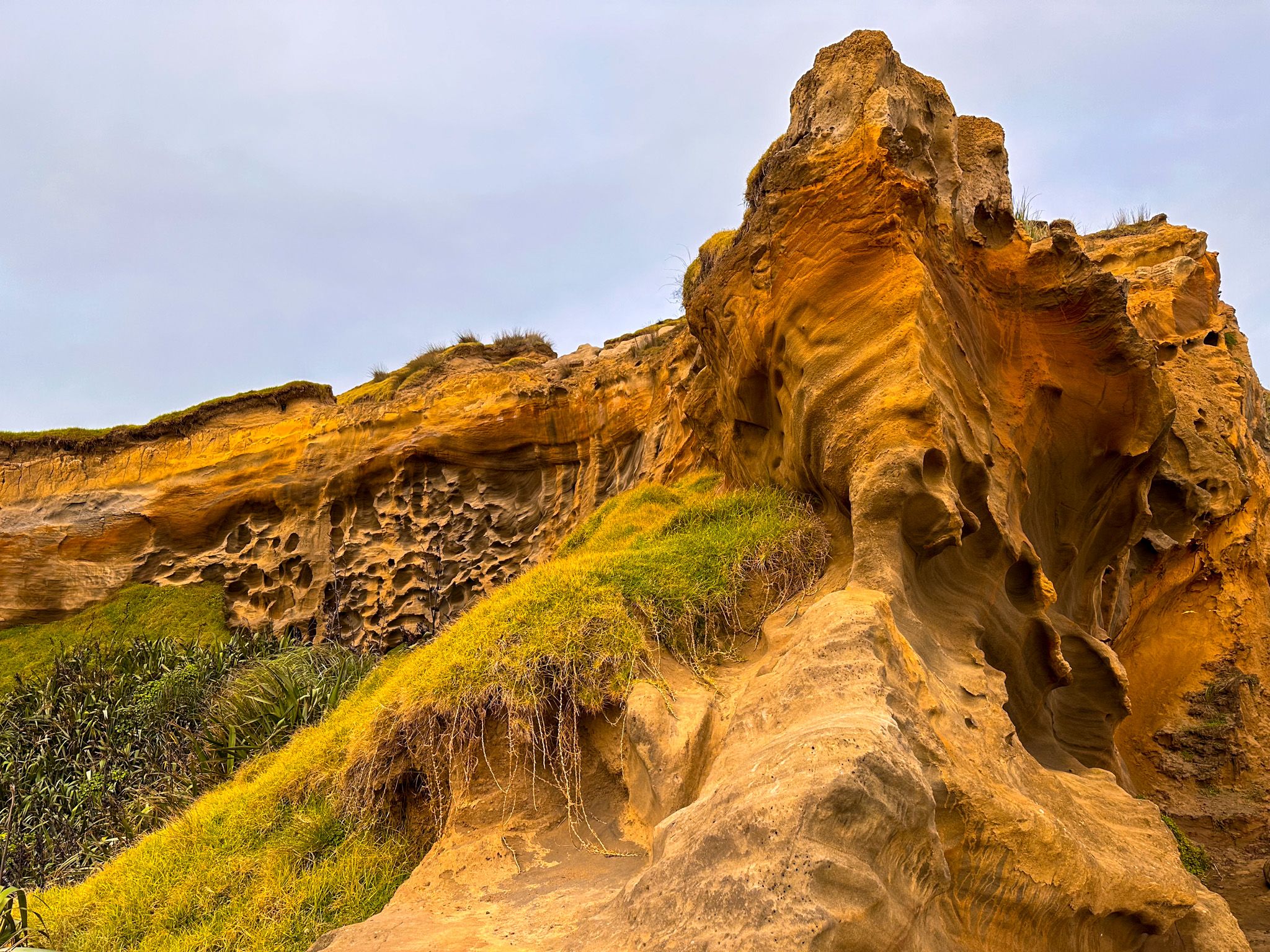
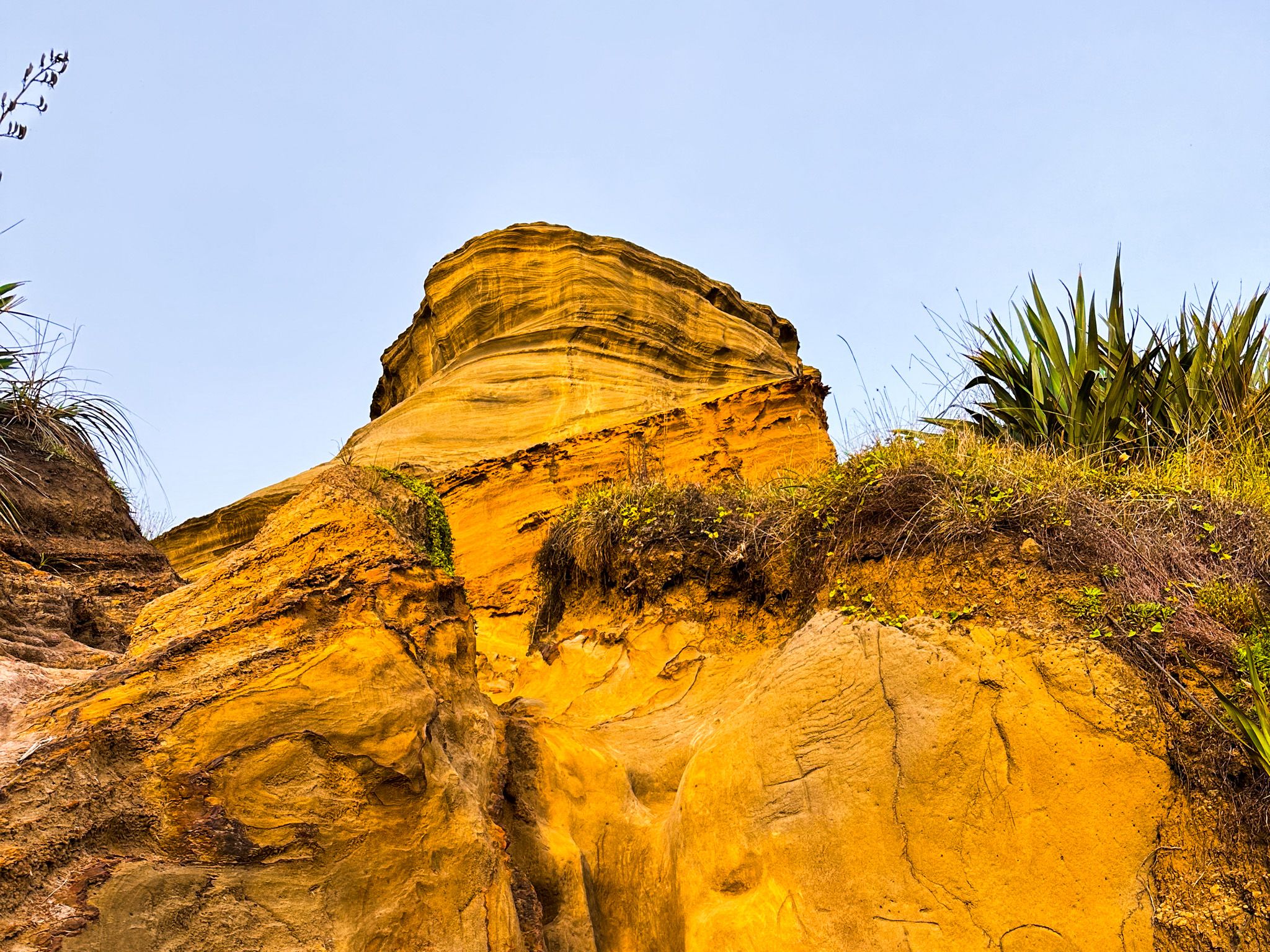
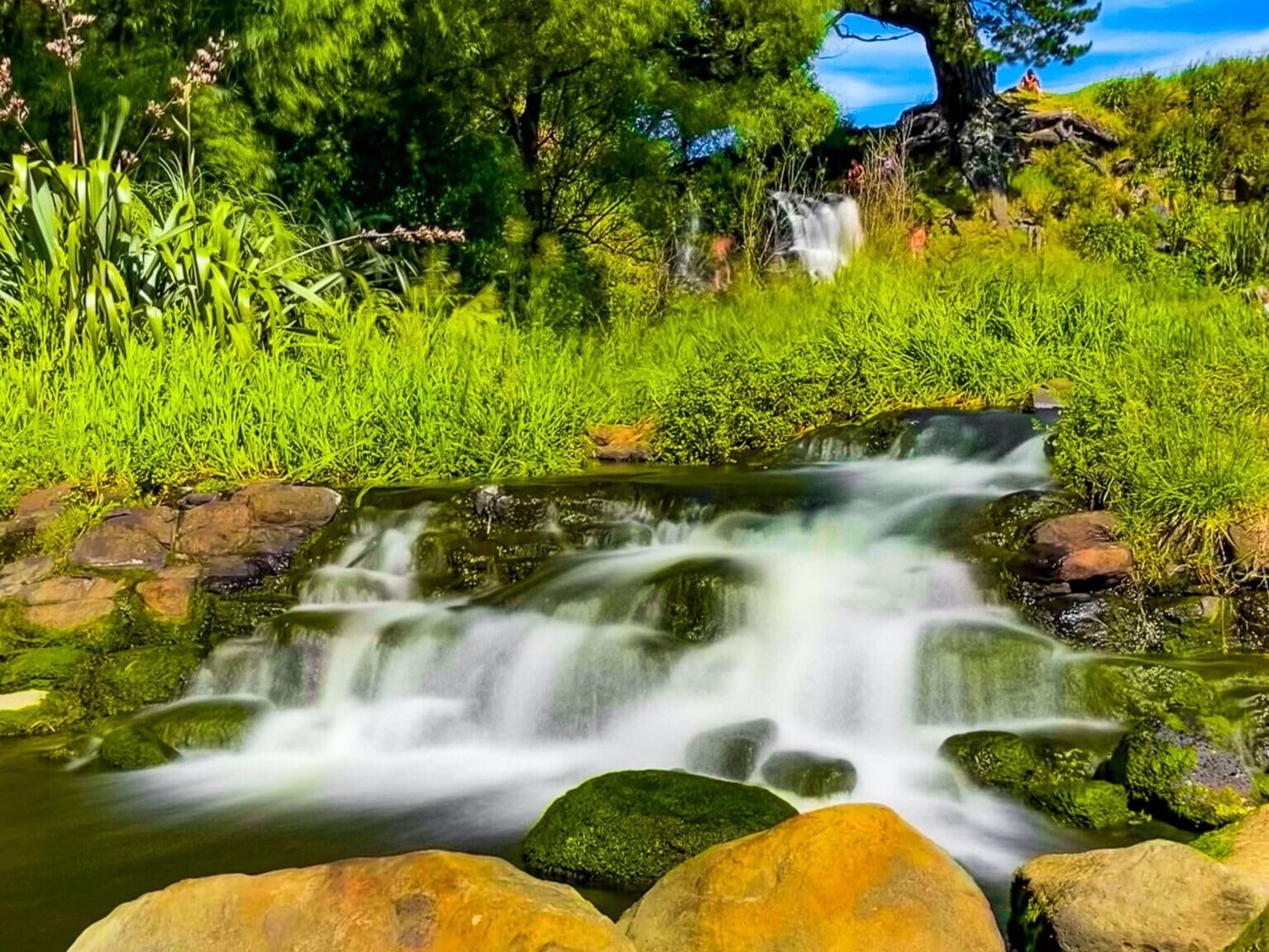
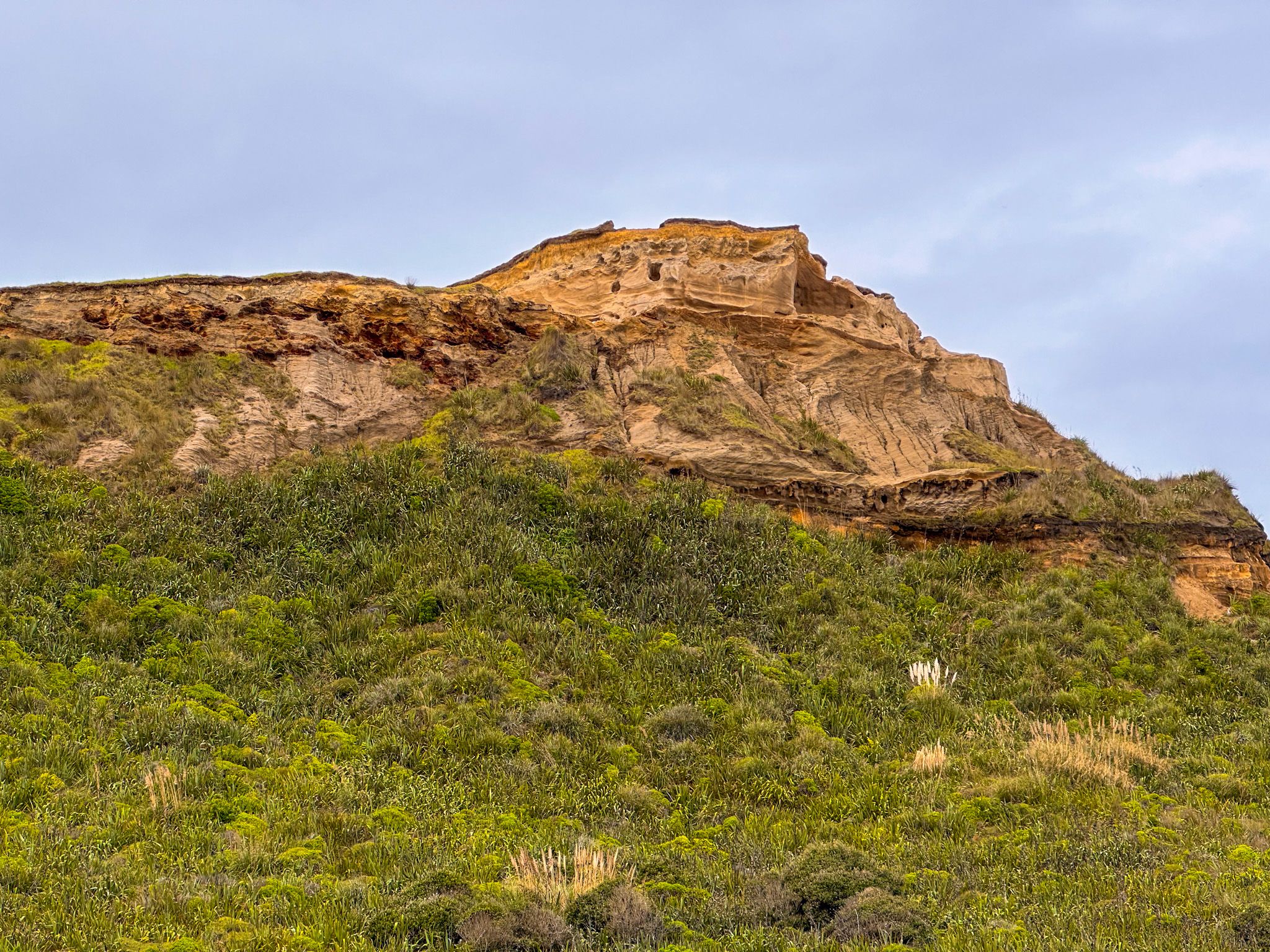
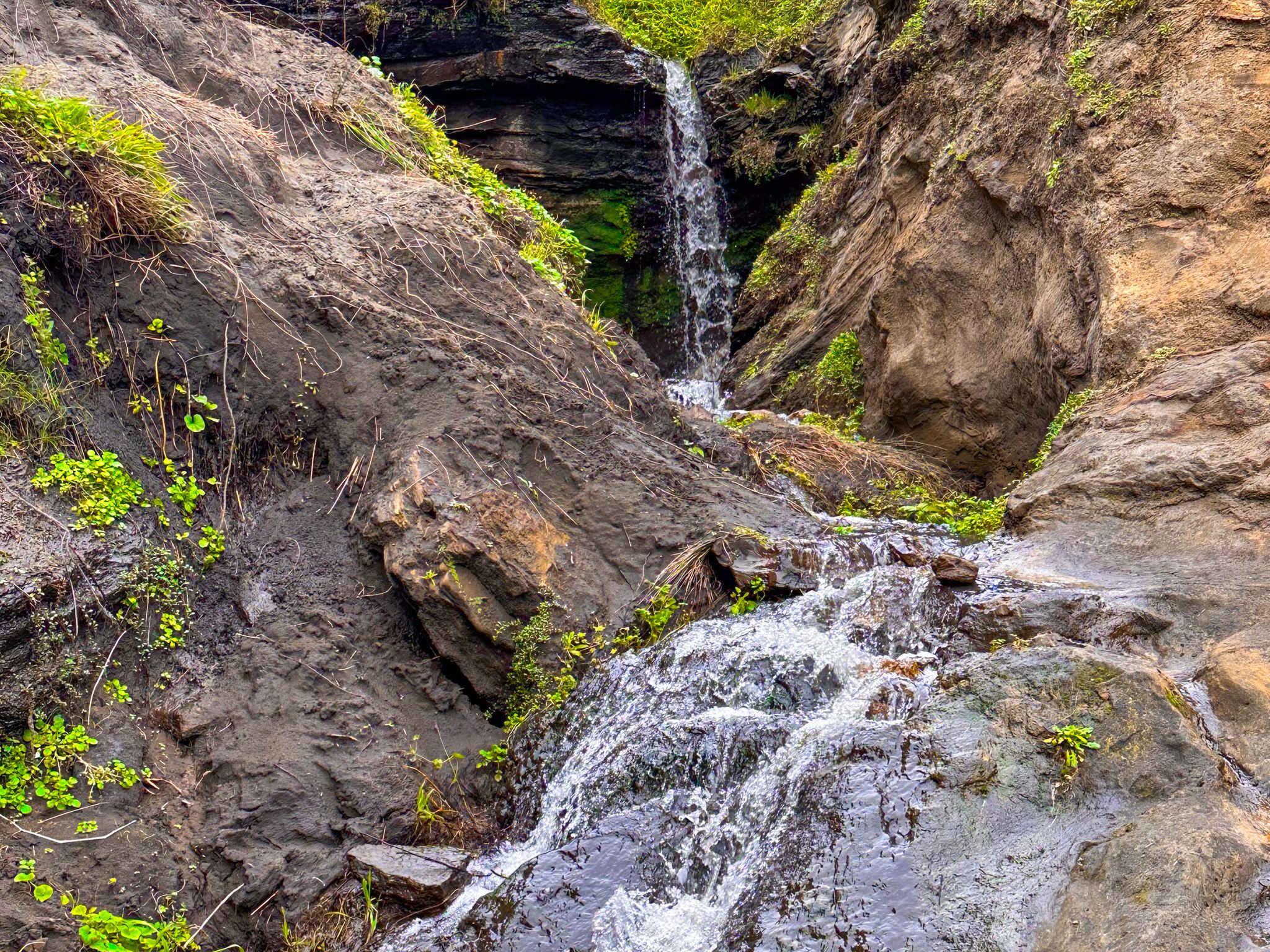
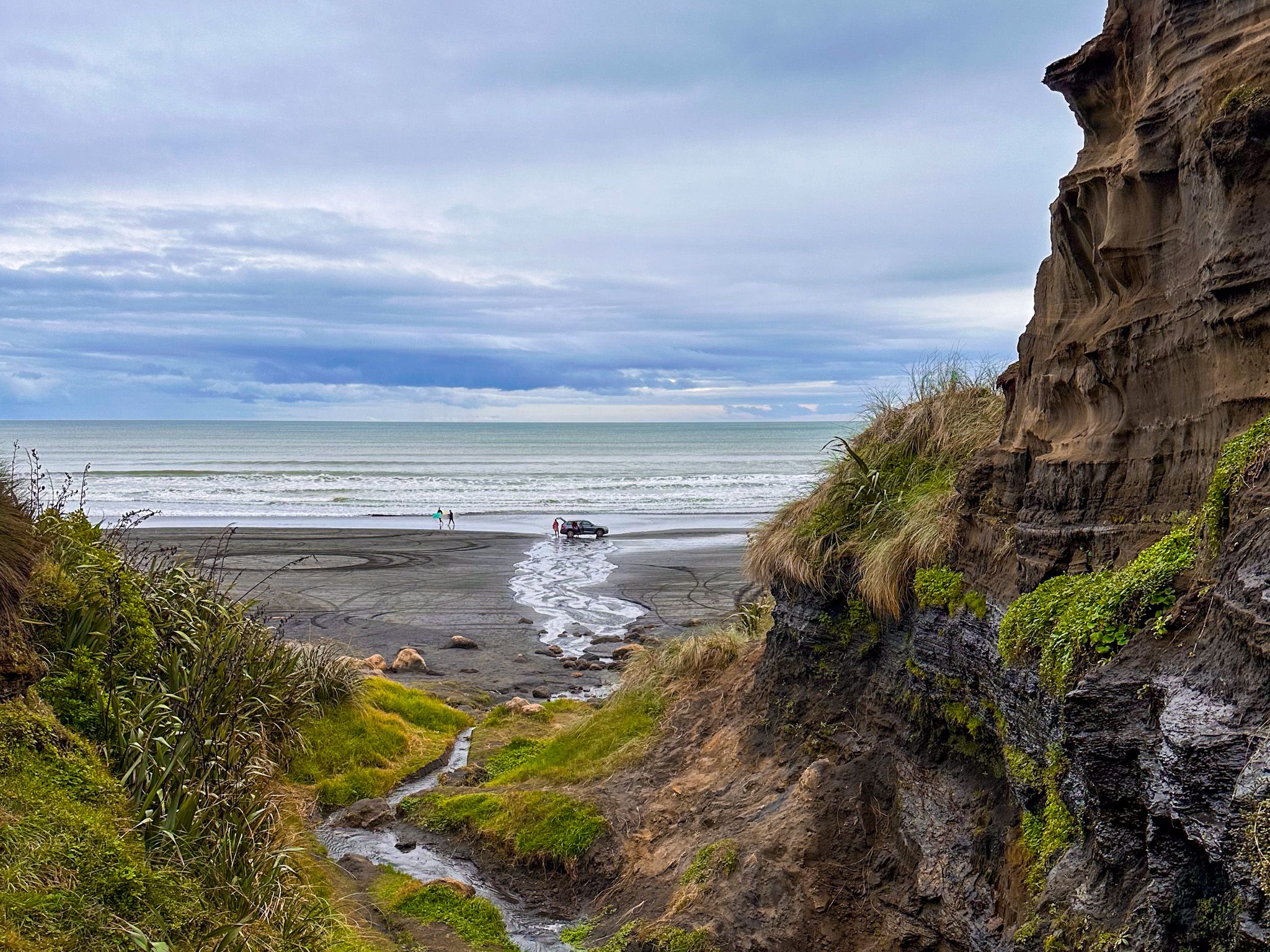
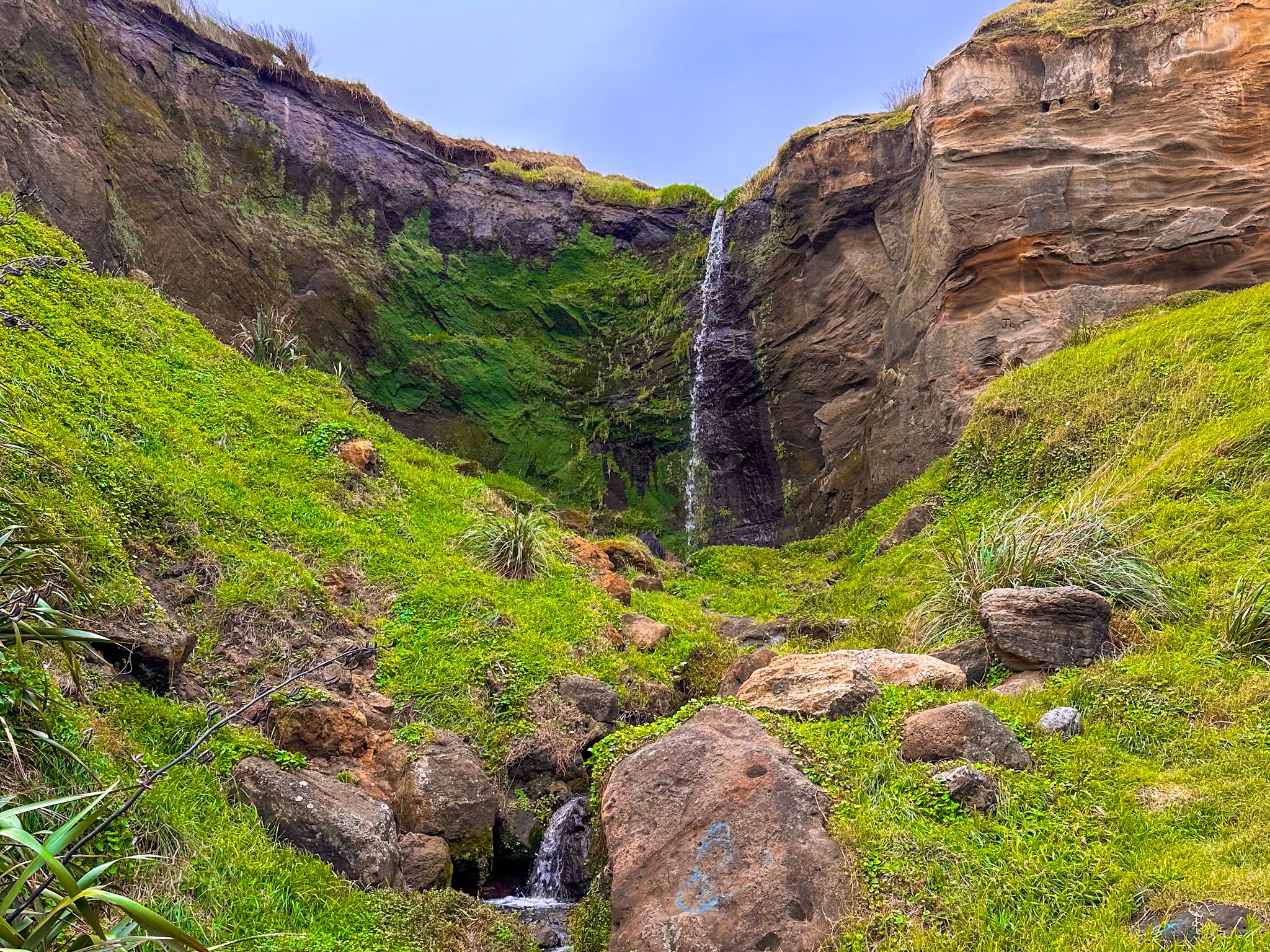
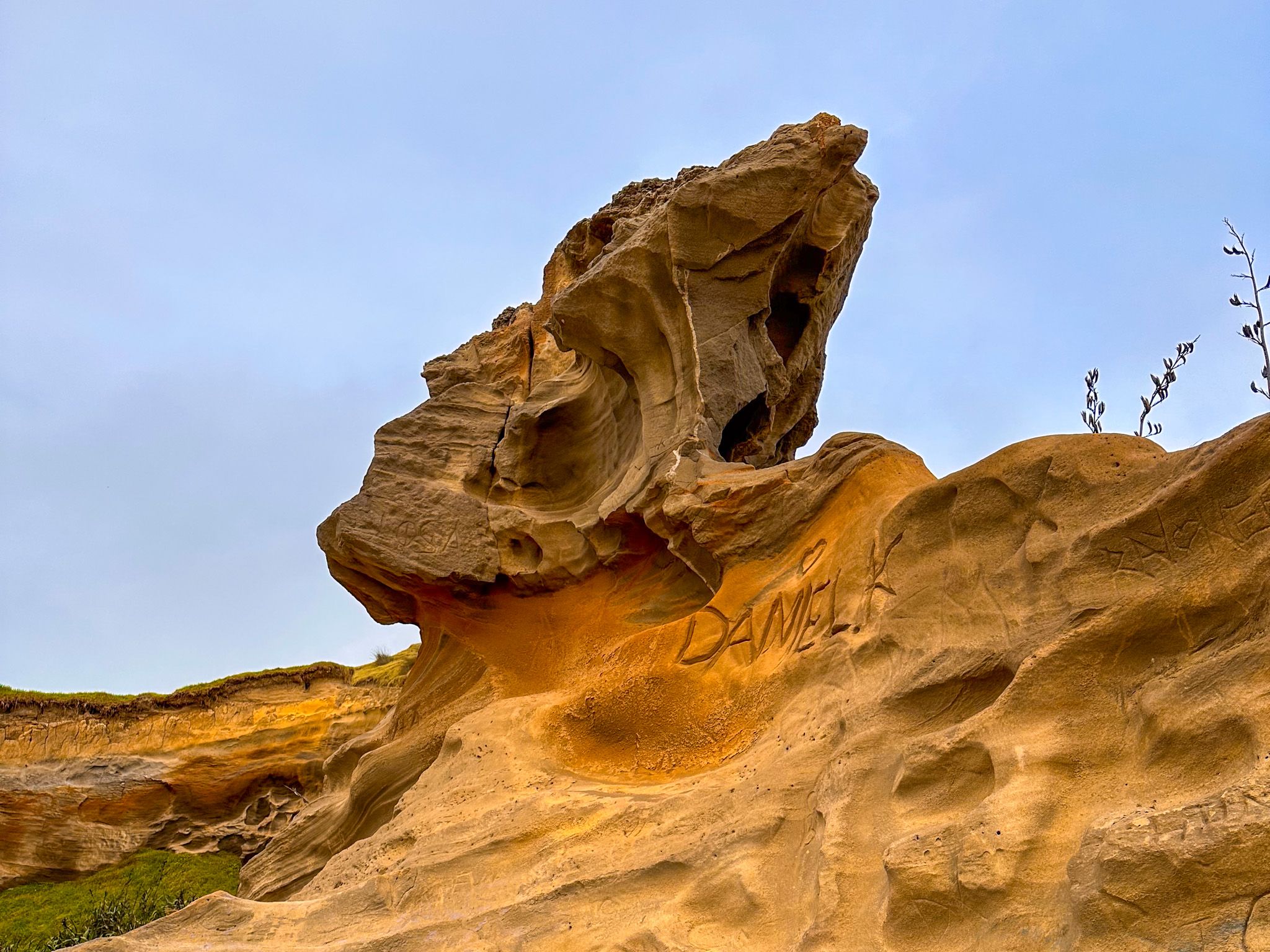
About 300 metres north of the car park and beach access, a gully cuts back into the cliff face where a waterfall drops into a small natural amphitheatre. A rough, unmarked track leads to the base of the falls, worth finding for the sense of discovery and the contrast between the enclosed rocky amphitheatre and the open beach just outside. For those keen to explore further, a rough track on the south side of the stream scrambles up to the top of the cliffs, passing through an interesting rock formation that, from some angles, takes on the profile of a head. The clifftop provides wide views along the coast in both directions. The tracks are informal and require care underfoot.
Activities and Dune Lakes
Driving on the beach requires a free annual permit. Surfcasting for kahawai and snapper is popular along the full length of the beach, particularly at dawn and dusk. Horse riding is common, and several operators on the peninsula offer guided treks that include sections of Karioitahi Beach.
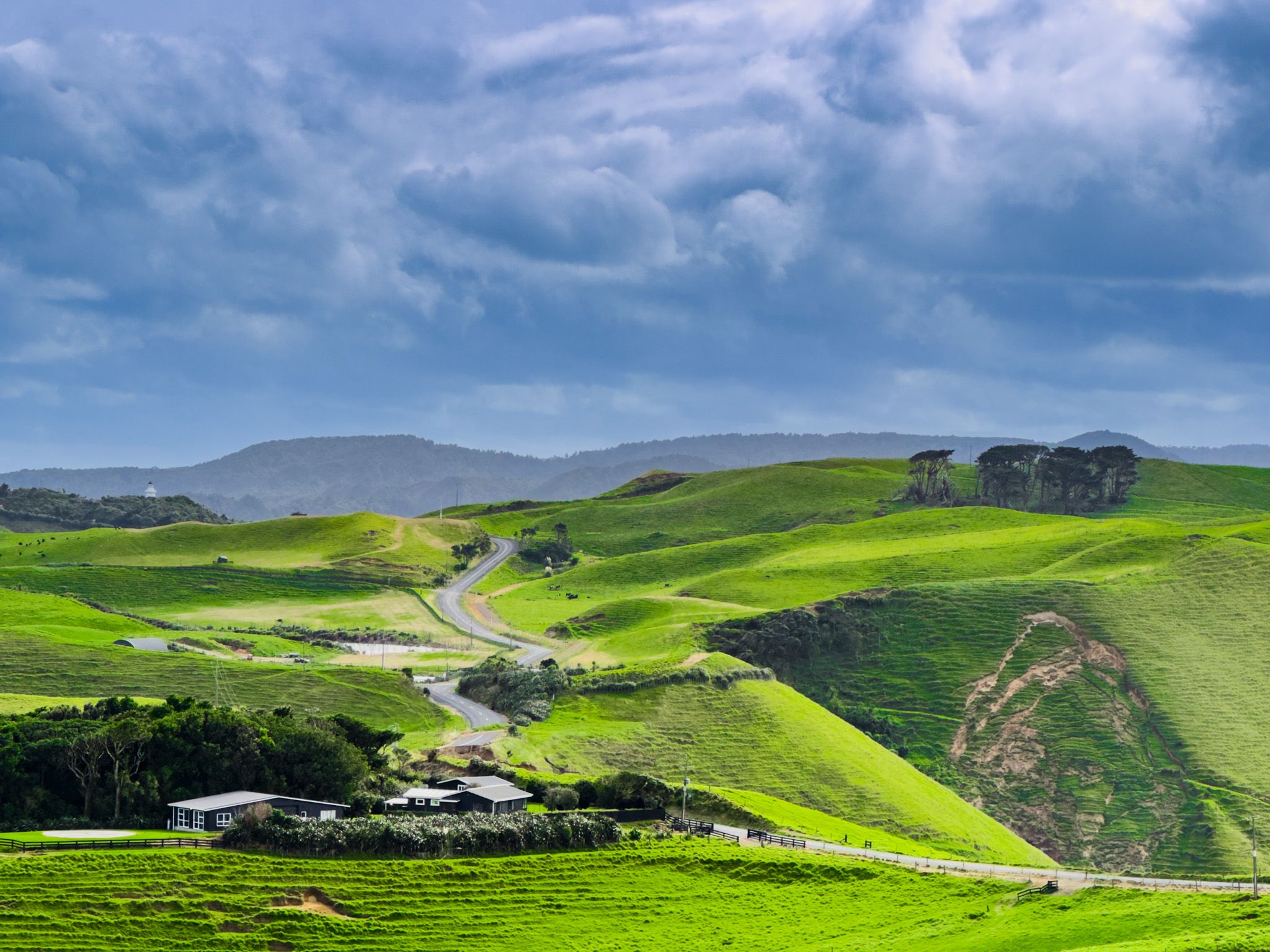
Freshwater lakes have formed behind the beach in the hollows between ancient dune ridges, including Lake Puketi, Lake Rotoiti and Lake Whatihua. These lakes are a characteristic feature of the peninsula's dune landscape and can be seen as you drive towards the beach.
How to Get There
From Downtown Auckland, it takes 70 minutes and is 71 km, via the southern motorway, connecting to State Highway 22 to Waiuku, then Karioitahi Road westward to the beach car park at the road's end. The road is sealed. There is plenty of on-site parking and toilet facilities. From Waiuku, the drive is nine minutes.
Other places to visit on the peninsula include Hamiltons Gap, Āwhitu Central, Manukau Heads, Āwhitu Regional Park and the Manukau Harbour Bays, Wattle Bay, Ōrua Bay, Grahams Beach and Big Bay, at the northeast tip of the peninsula.